A fillet knife is one of the most useful knives in the lineup, and one of the most likely to be poorly sharpened.
That is not because the edge is mysterious. It is because the knife itself is built differently. The good news is that sharpening a fillet knife does not need to be complicated. The key is using tools and techniques that support the blade, hold a consistent angle, and make it easy to refresh that edge in the field.
Why fillet knives are harder to sharpen
Fillet knives are thin, flexible, and designed to move through tight spaces with precision. That flex is exactly what allows the blade to follow bones, work through delicate cuts, and reach places a stiffer knife cannot.
That same flexibility that makes them so effective on fish and game is the very thing that makes them hard to control during sharpening.
When a blade flexes during a sharpening pass, angle control becomes less consistent. Instead of holding the edge firmly against the abrasive, the knife can bend away from it. That makes it harder to apex the edge cleanly and harder to get even results from one side to the other. In practical terms, that often means more guesswork, more time, and a knife that still does not feel as sharp as it should.
The best way to sharpen a fillet knife

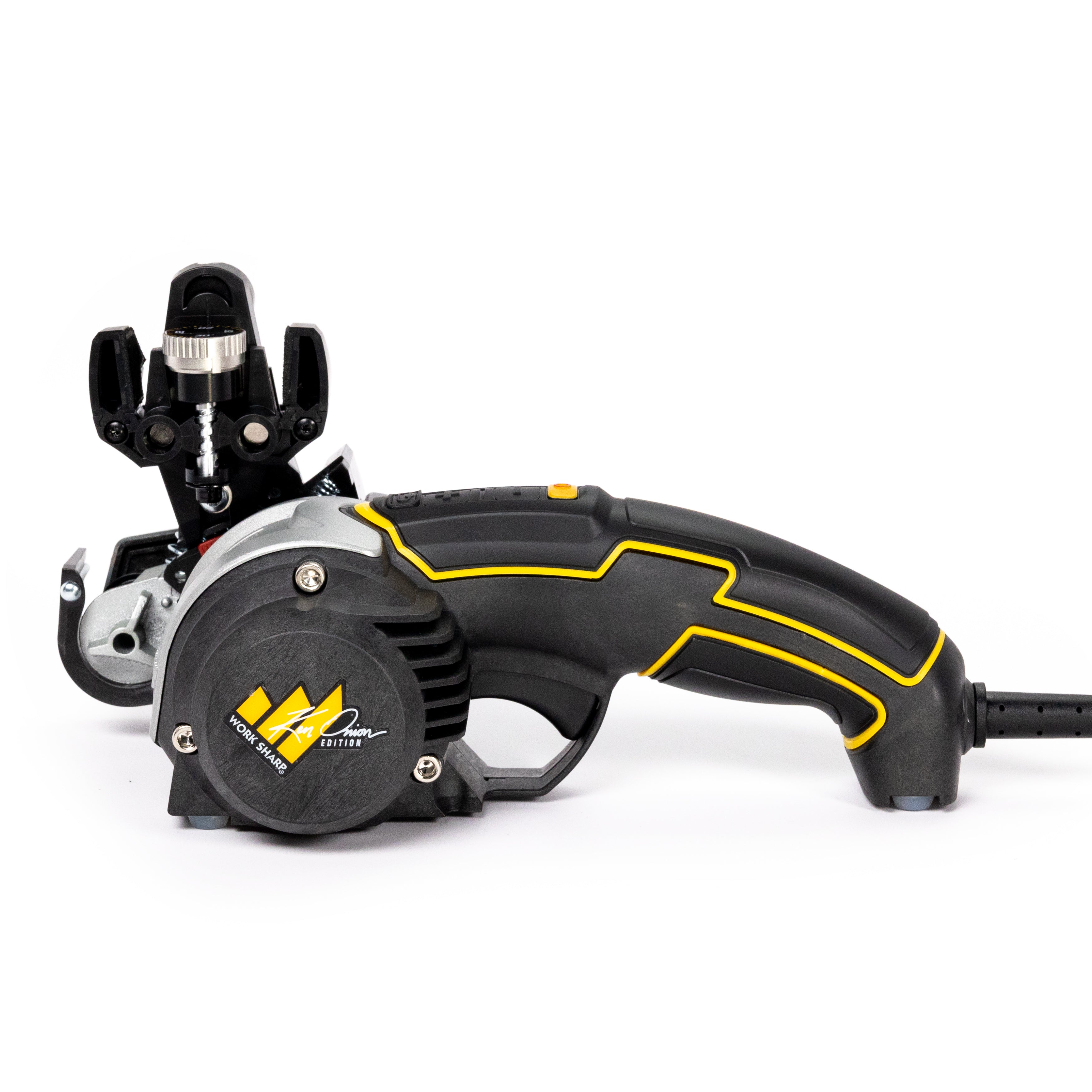
For sharpening a fillet knife at home, a guided powered system makes a lot of sense. Our recommended approach is the Work Sharp Knife & Tool Sharpener or the Work Sharp Ken Onion Edition Knife & Tool Sharpener.
The reason is simple: both systems use built-in angle guides ideal for flexible blades.
With a flexible blade, support is important. The angle guide helps hold the fillet knife where it wants to flex, keeping the edge in a more stable position as the blade moves through the sharpening pass. That added support makes it easier to sharpen consistently from heel to tip without fighting the knife the entire time.
These two systems also make the process easy and straightforward. Simply place the knife in the guide, power on the abrasive belt, then make passes until you feel the burr. Because many fillet knives use softer steels and thin blades, they tend to raise a burr fairly quickly. Once a burr forms on one side, repeat the process on the other side, then move to a finer belt to refine the edge.

That combination of angle guidance, blade support, and quick burr formation is what makes a powered sharpener such a solid choice for fillet knives.
How to keep a fillet knife sharp in the field
Getting a sharp edge at home is only half the job. Keeping it working through a day of cleaning fish or game is what really matters.
For field maintenance on most knives, we recommend the Guided Field Sharpener. For a fillet knife, however, we actually recommend something many people would not expect: the Work Sharp Kitchen Pull-Through Sharpener.
That recommendation is less about novelty and more about practicality. In the field, hands are often wet, cold, messy, or gloved. Fine motor control is not always there, and nobody wants a complicated sharpening process in the middle of the job. A sharpener with a large handle and a simple motion is easier to manage when conditions are less than ideal.

For regular touch-ups, the ceramic slot is the primary tool. The back-and-forth motion is simple, controlled, and effective for bringing an edge back when it is starting to lose bite. If the knife hits bone or suffers more serious edge damage, the diamond side slot is there for more substantial repair.
That makes the pull-through a maintenance tool, not a replacement for full sharpening. It helps preserve the edge you established at home and keeps the knife working until there is time to do a more complete sharpening later.
Can a fillet knife be sharpened on a stone?
Yes. A fillet knife can absolutely be sharpened on a stone.
It is just more demanding.
Because the blade is thin and flexible, it is harder to keep steady pressure and a consistent angle through the full stroke. That does not make stone sharpening wrong. It just means the margin for error is smaller, especially for someone who is not already comfortable sharpening flexible blades freehand and likely working in challenging conditions.
Final thoughts

A fillet knife is supposed to flex. That is part of what makes it so effective. But that same design is what makes sharpening trickier than it is on a stiffer blade.
The simplest approach is to put a consistent edge on the knife at home using a guided system that supports the blade, then maintain that edge in the field with a tool that is easy to use when conditions are messy and less controlled.
Do that, and sharpening a fillet knife stops feeling like a fight. It becomes what it should be: a straightforward part of keeping a great tool ready for the next fish, the next hunt, and the next job.